Fuzz Pedal
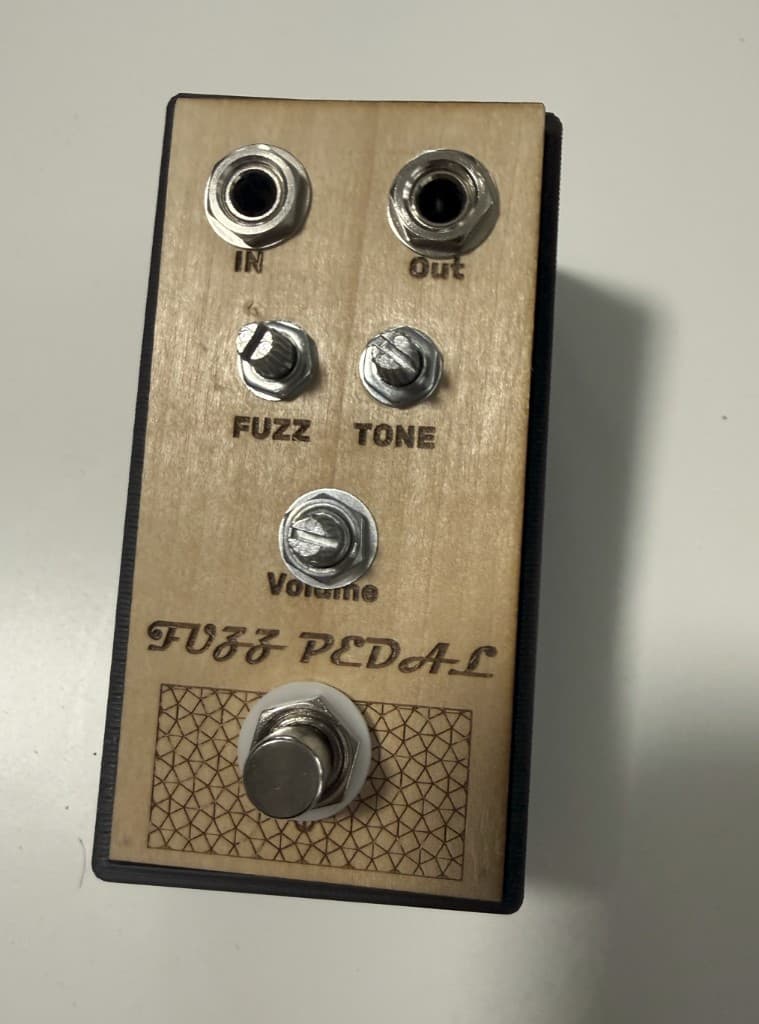
A completed custom guitar fuzz pedal build, from transistor and capacitor selection through ECAD design, enclosure fabrication, and final wiring.
Final build
Overview
This project focuses on building an NPN-transistor fuzz pedal that produces heavy clipping and square-wave style distortion. The guide covers the full build path: pick components, design the schematic, prototype on breadboard, build housing, then wire and test.
Build flow from the guide
- ·Choose parts: transistor type (I used 2N2222), resistor values for bias/gain, and capacitor values for input/output tone shaping.
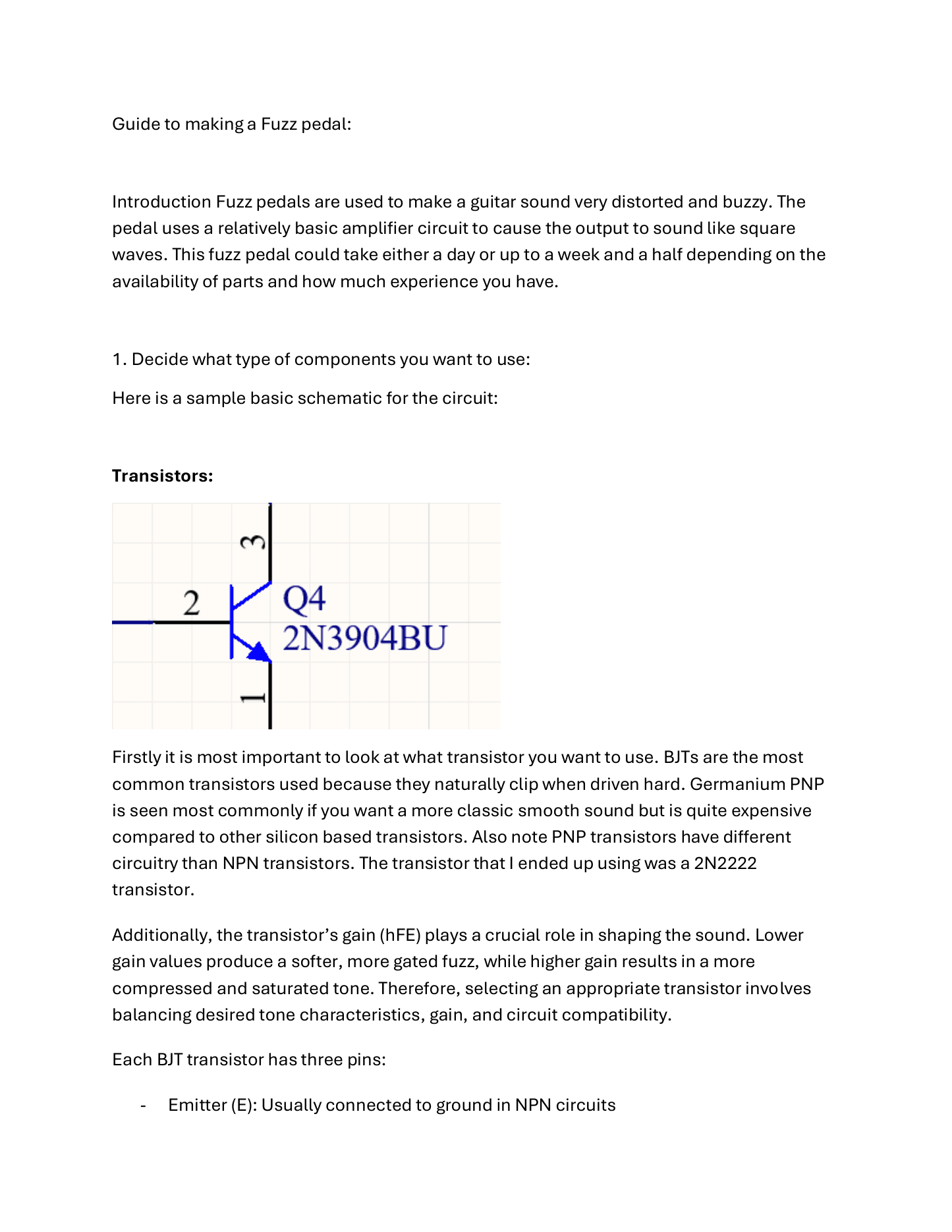
- ·I originally considered a 2N3904, but switched to a 2N2222 because it was available and worked well for this build.
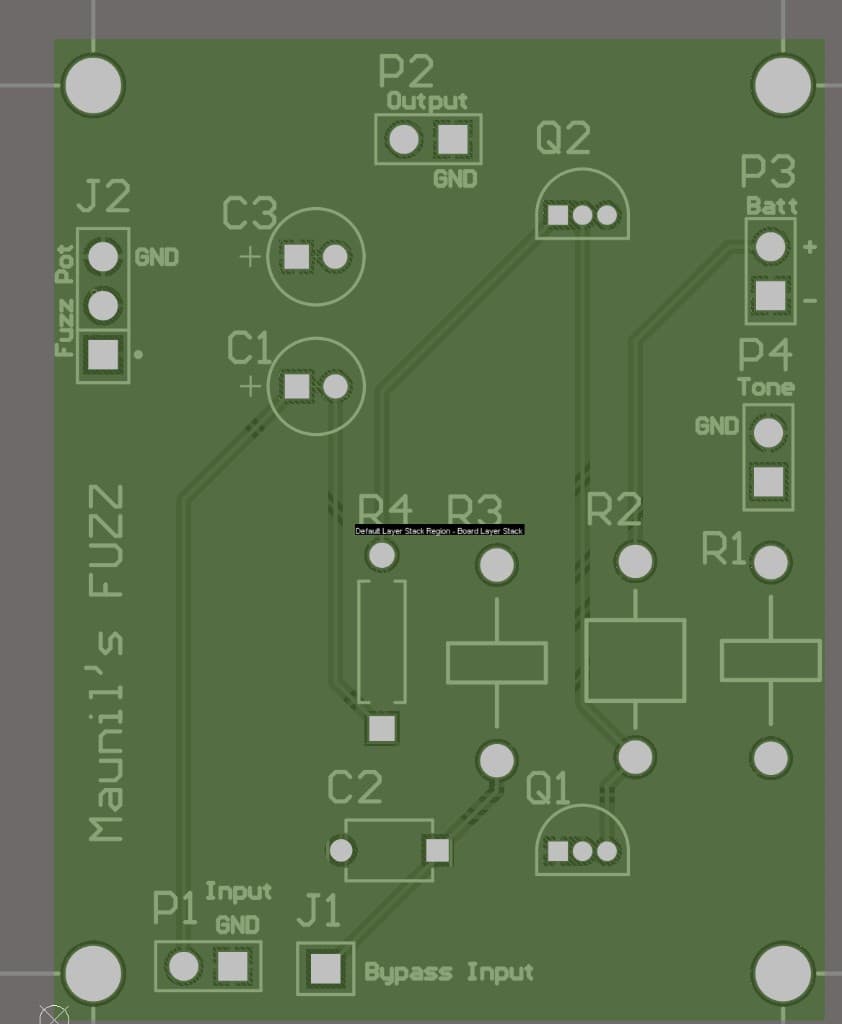
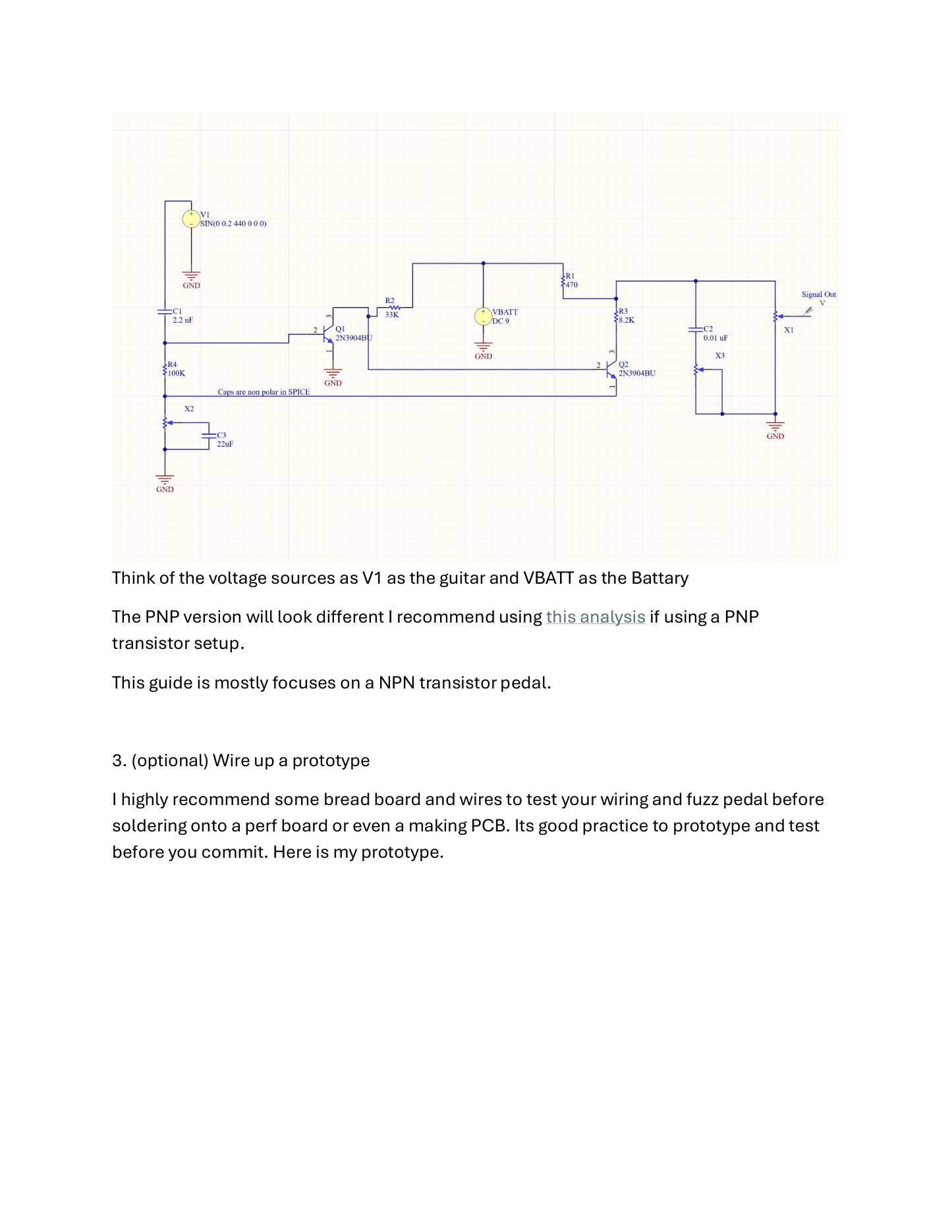
- ·Build and validate an NPN schematic, including correct transistor pinout and jack wiring.
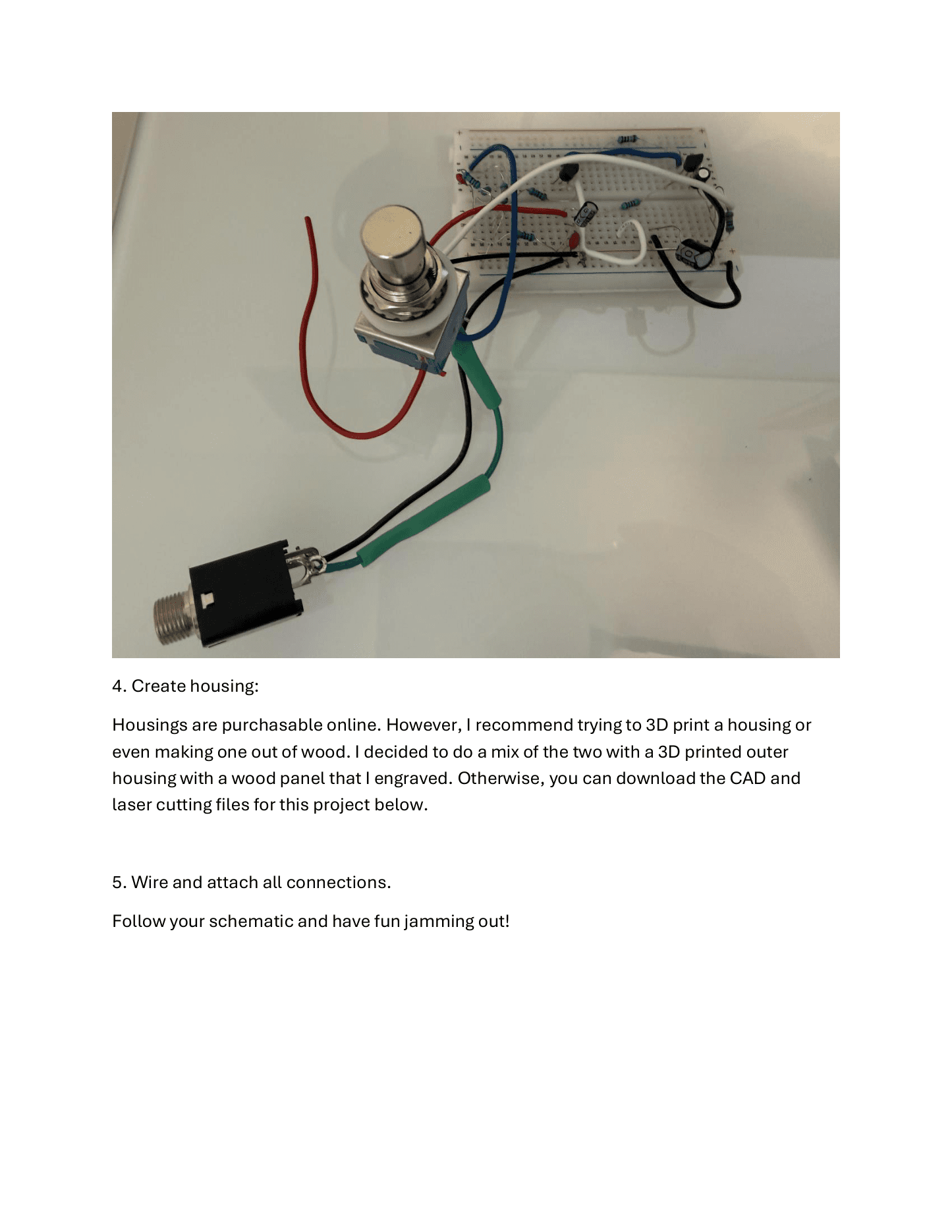
- ·Prototype on breadboard before soldering to reduce rework and debug faster.
- ·Finish housing + wiring, then optionally add a tone control (low-pass style mod) for darker/smoother output.
Key design notes
Transistor and gain
BJT gain (hFE) strongly shapes fuzz feel: lower gain can sound more gated, while higher gain tends to be more compressed and saturated.
Capacitor impact
Input and output capacitors set how much low-end is preserved. Input values around 0.01-0.1 uF and output values around 0.01-1 uF heavily change tone.
Recommended controls
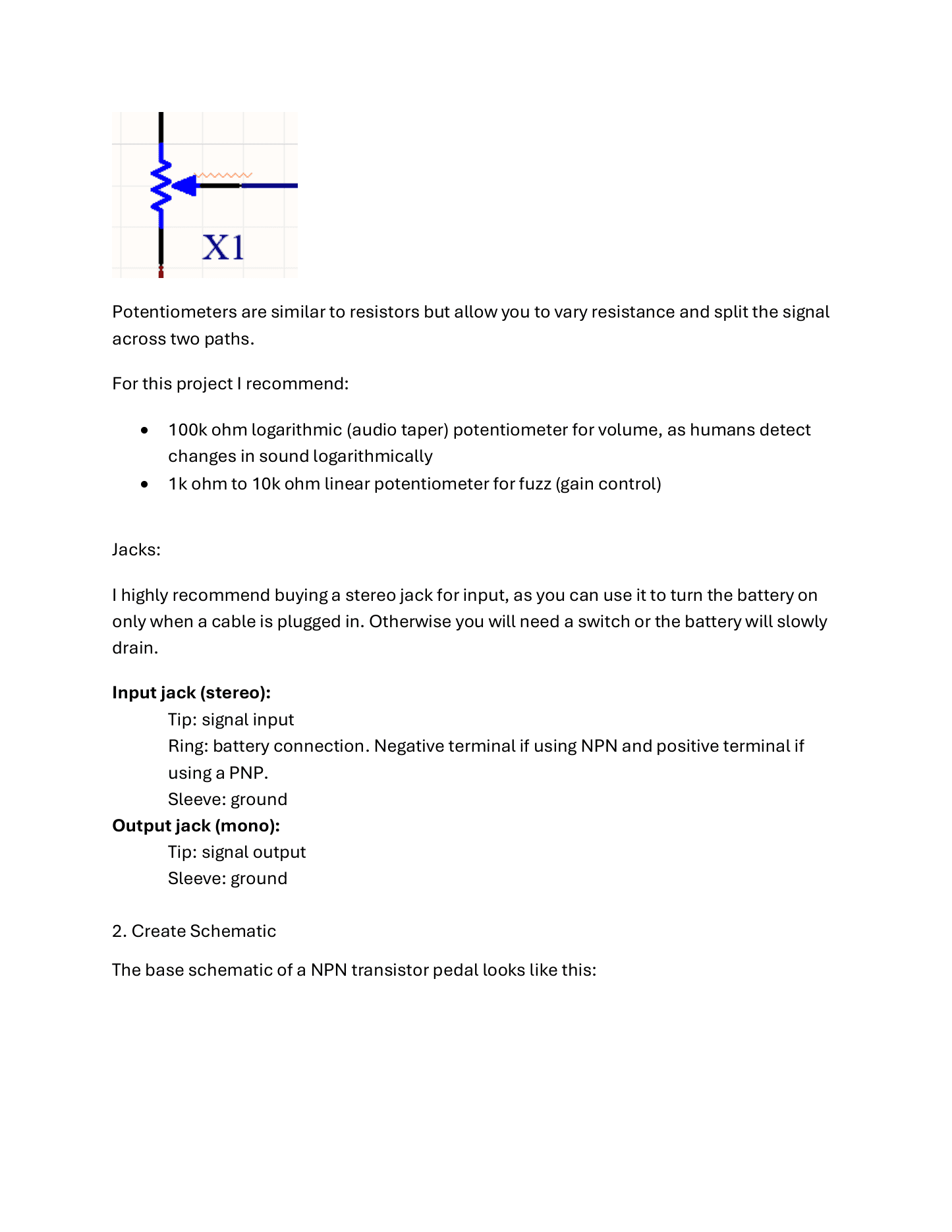
100k log pot for volume and 1k-10k linear pot for fuzz control give usable sweep and better adjustment feel.
Power and jacks
Stereo input jack helps battery switching so power is only active when a cable is plugged in.
Guide pages and build visuals
The images below are pulled directly from my PDF guide and show the key steps and visuals used during the build process.
Tools used
Breadboard prototyping, soldering tools, analog component testing, enclosure fabrication, and Altium Designer for ECAD (schematic + PCB work).
Downloads
Download the guide and ECAD files for this build.
Note: The provided SolidWorks file is only the bottom housing. Please design your own lid as an exercise, since component dimensions and mounting details are not fully standardized.